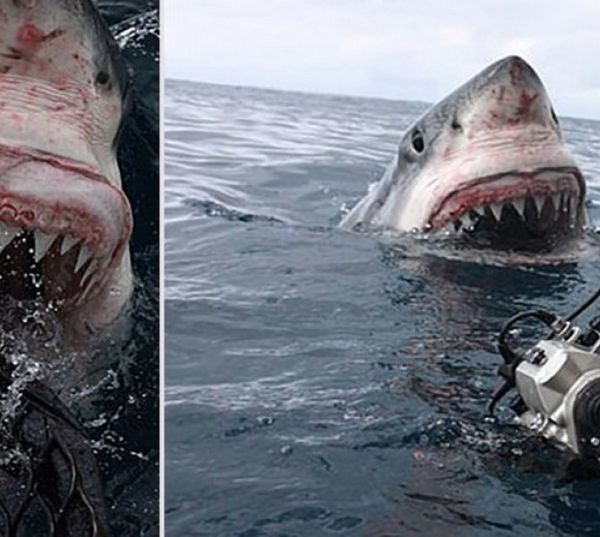
Before deploying REMUS (Remote Environmental Monitoring Unit), the Woods Hole Oceanographic Institution team tagged some great white sharks in the area using tags that could be picked up by the underwater vehicle from depths of up to 100 meters. Once received, the SharkCam can locate and track these signals, moving closer to the animals for optimal 360° viewing.
A great white shark attack from its prey’s perspective
. But the researchers got much more than they expected. Whether defending their territory or simply feeding, the sharks showed great interest in the 2.3-meter-long wels catfish. The images are impressive: we can see the sharks emerging from the depths to bite the camera, a technique also used to capture seals. During
predatory attacks, sharks hide in the shadows, beneath their prey, before emerging from below and biting, the scientists explain. The cameras allow us to observe a specific characteristic of the great white shark: when it attacks, it must protect its eyes from possible impacts and defensive attempts by its prey.
But unlike many other species, the great white shark doesn’t have a nictitating membrane covering its eyes. It must therefore roll them back into their sockets to protect them.
Better understanding great white shark hunting techniques.
When REMUS was brought to the surface, researchers were surprised by what they saw: massive tooth marks covering much of the vehicle. One of them claimed that not even a human with a scalpel could have inflicted such wounds on REMUS. A total of a dozen interactions between the shark and the underwater vehicle were recorded.
The team hopes that these exceptional images and future REMUS dives will allow them to better understand how sharks hunt their prey in their natural environment. The robot has also filmed basking sharks and great whites off Cape Cod, and scientists plan to use it to track other large marine animals, such as turtles.
ADVERTISEMENT
